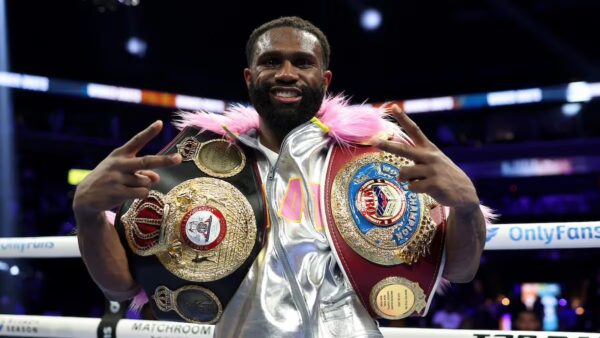
The World Boxing Association (WBA) is proud to spotlight Dr. Abraham Daniel, a valued member of the WBA Medical Committee and a distinguished delegate and guest speaker at our 104th Annual Convention, last month in Orlando, Florida. Invited by the WBA President Gilberto Mendoza, Dr. Daniel addressed a topic that is too often overlooked in the sport: Mental Health in Professional Boxing. His session underscored the critical link between mental well-being and performance, safety, and longevity in the sport.
Dr. Abraham Daniel of London, United Kingdom, is a dental surgeon, with an ongoing pursuit of formal education in psychology. Aside from his academic achievements, he is professional boxer who previously competed as a welterweight and now fights in the super-welterweight division. With a unique ring alias of Dr. Hitman, he holds an impressive record of 22-3, with a career that has shown resilience and continuous growth. He is a key member of the WBA Medical Committee, contributing his clinical insight and boxing experience to advance fighter health and safety.
Dr. Daniel’s unique blend of medical training, psychological study, and competitive boxing experience provides a rare and valuable perspective on the mental health challenges faced by athletes in high-stakes combat sports.
The Presentation: Mental Health in Boxing
What is mental health?
Mental health refers to our emotional, psychological, and social well-being. It affects how we think, feel, and act, influences how we handle stress, relate to others, and make choices. For boxers, mental health can impact preparation, focus, performance, and recovery.
Why is mental health particularly important in boxing?
Boxing demands extreme physical conditioning, high risk, and intense scrutiny from fans, boxing broadcasters and promoters.
The sport’s inherent pressures—weight management, weight cuts, fights on a tight schedule, and public evaluation—can amplify stress and anxiety.
Repeated injuries, long-term brain health concerns, and the physical toll of the sport intersect with mental well-being in complex ways.
Why is there a taboo around the subject?
Stigma: Admitting vulnerability can be perceived as weakness in a sport that prizes toughness.
Culture: Traditional boxing cultures often emphasize stoicism, self-reliance, and “tough it out,” which discourages seeking help.
Fear of repercussions: Boxers may worry that discussing mental health could affect matchmaking, sponsorship, or career prospects.
Misunderstanding: Mental health conditions can be misunderstood, leading to fear or dismissal rather than support.
Dr. Daniel emphasized that normalizing conversations about mental health is not a deviation from toughness but a component of true preparedness and resilience. Addressing mental health proactively can prevent crises, shorten recovery times, and extend a fighter’s career. He also played a very profound and emotional segment of a Danny Garcia post-fight interview from August 2022 at the Barclays Centre in New York whereby he mentioned factors such as the pressures oflife, boxing and being a good father.
The Case for Regular Mental Health and Physical Assessments
Integral assessments
The presentation discussed that although annual and pre-fight boxing medical assessments only covered the physical health of boxing and nothing regarding the mental health of the boxers. And this was something that needed to change.
Mental health assessment: Screening for anxiety, depression, stress, sleep disorders, PTSD, and other conditions; evaluating coping strategies, resilience, and emotional regulation. It was imperative to also gain the trust and confidence of the fighters, that any decision of cancelling the fight would be for the fighter and team. The psychologists or psychiatrists would only offer their professional advisory opinion.
Psychiatric analysis (pre-fight and ongoing): Where appropriate, confidential psychiatric consultations can help tailor support plans, identify early signs of concern, and coordinate care with medical teams.
Physical assessment: Neurological baseline and post-injury evaluations; monitoring concussion history, sleep quality, nutrition, and overall physical health since these influence mental well-being.
Holistic health review: Substance use, nutrition, hydration, recovery practices, social support networks, and life-event stressors.
Why these assessments matter
Early detection of mental health concerns can prevent crises that derail training camps or lead to medical disqualification.
A robust mental health plan can improve focus, motivation, stress management, recovery, and performance consistency.
Comprehensive pre-fight analysis helps identify risk factors and tailor interventions for each fighter, potentially reducing injury risk and improving decision-making under pressure.
Factors and Causes of Mental Health Issues in Boxers
Chronic physical strain and injury: Ongoing pain and recovery demands can elevate anxiety and mood disturbances.
Concussions and brain health concerns: Repeated head trauma is linked to mood changes, cognitive issues, and long-term neurological risk, contributing to mental health stress.
Weight management and weight cuts: Restricted diets and dehydration can affect mood, energy, and cognitive function.
Competition pressure: The spotlight, expectations, and fear of losing can heighten stress and self-criticism.
Career uncertainty: Injuries, fight cancellations, and aging can trigger worry about legacy and financial stability.
Stigma and culture: Perceived weakness in admitting struggles can delay seeking help.
Substance use and coping strategies: Some athletes may rely on substances to cope with stress or pain, creating further health risks.
Life events: Personal circumstances outside the ring (family, relationships, finances) can compound stress during training cycles.
Coping Strategies and Ways to Improve Health and Well-Being
Normalize seeking help: Create safe, confidential pathways for mental health support within boxing organizations such as the WBA. Provide access for counselling, psychiatric assistance and sports psychology.
Integrated care teams: Pair medical doctors with psychologists/psychiatrists, sleep specialists, nutritionists, and strength coaches to address the whole athlete.
Pre-fight psychiatric considerations: Evaluate mental readiness alongside physical readiness; consider routine consultations as part of fight camps.
Education and destigmatization: Workshops and campaigns that frame mental health care as a routine component of peak performance.
Resilience training: Techniques such as mindfulness, breathing exercises, cognitive behavioral strategies, and visualization to manage stress and enhance focus.
Sleep and recovery programs: Prioritize sleep, recovery modalities, and rest periods to support mood and cognitive function.
Nutrition and hydration: Personalized plans that support energy, mood stability, and cognitive performance.
Family and social support: Encourage involvement of support networks to provide support and accountability.
Crisis pathways: Clear protocols for when a boxer needs urgent mental health support, including access to emergency services and confidential hotlines.
Ongoing research and data collection: Use anonymized data to study patterns, outcomes, and best practices for mental health in boxing.
Dr. Daniel’s Vision for the Future of Boxers’ Health
Dr. Daniel advocates for a proactive, science-driven approach to mental and physical health in professional boxing – one which is evidence-based. His vision includes:
Routine mental health and physical assessments for all fighters, integrated into training camps and licensing processes.
Psychiatry-informed fight readiness evaluations to help ensure athletes are in optimal condition mentally as well as physically.
Programs that reduce stigma and promote help-seeking behaviours as a standard part of athletic development.
Collaboration with boxing federations, commissions, gyms, and medical professionals to implement best-practice guidelines that protect fighters’ safety and well-being, which the WBA fully supports and has always advocated.

The WBA President, Gilberto Jesús Mendoza, said concerning Daniel and his presentation: “Dr. Abraham Daniel’s presentation was one of the most compelling of our medical seminar at the convention. Mental health is one of the key pillars in today’s boxing landscape for the proper development of fighters, and the way Dr. Daniel addresses this topic clearly shows the direction we need to be working toward.”
Tragic Accident Involving Anthony Joshua

Dr. Daniel was also asked about his thoughts on the recent tragic car accident in Nigeria involving the British former world heavyweight Anthony Joshua, whereby his two close friends and members of his team, Kevin Abdul Latif Ayodele& Sina Ghami, were tragically killed. Asked how this traumatic experience would affect Joshua, Dr. Daniel stated“First and foremost, our thoughts and prayers go out to the families & friends of these two wonderful people. Abdul Latif who was affectionately known as Latz, was actually a friend of mine and I was with him only a weeks ago in Miami when Anthony Joshua fought Jake Paul. So it has come as a huge shock and it has been extremely upsetting. We ask God Almighty to bestow his mercy upon them both. We have seen incredibly amazing tributes from all over the world, especially for Latz, also for whom in such a short amount of time asubstantial charity fund for the building of a mosque in his name was raised. And the turnout for their funeral in London was incredibly humbling with thousands having turned up from worldwide. Nobody can imagine what Anthony Joshua must be going through. Both were extremely close andchildhood friends of Joshua and they both were from his inner circle of trust and loyalty. People who were integral members of his team and entourage. So this would extremely hard and a life changing event for Anthony Joshua who himself would have been completely shook up. You have to remember, both Latz and Sina, were on one side of the car that hit the stationary lorry and killed them. Joshua was on the same side as the driver and survived – albeit with minor physical injuries. If he had been on the other side, he would have been killed. In fact, it is said the driver had asked Joshua to swap seats with one of his two friends as he was obscuring the mirror owing to his size. So what goes through such a person’s mind? I personally believe once time passes, he will want to resume his boxing career, especially since both Latzand Sina, would have wanted him to do so. But aside from counselling and therapy, I believe sessions with a sports psychologist would be a must. As the great George St. Pierre once said, a fight is 90% mental and 10% physical. Anthony Joshua will not only have to train physically for his next mega fight but also prepare and train mentally more than ever now after such a tragic event in his life. But at the moment, we would not even be thinking about boxing, rather mourning the loss of people who were like family and getting himself better. And our thoughts and prayers should be with him.”
Dr. Hitman Resuming His Career

After having taking time off himself due to injuries and personal circumstances, Abraham Daniel is poised to resume his boxing career in 2026. He approaches this next chapter with renewed focus and a holistic plan that emphasizes both performance and well-being. He enters 2026 with several exciting opportunities in the pipeline. “I’m very excited for 2026 and it’s been absolutely wonderful to be back in the gymand training hard. I have been speaking with my team and other important people in world boxing, and I’m very much looking forward to getting back in that squared circle under those lights, God Willing.”
Abraham Daniel’s return in the boxing ring also about demonstrates that a modern boxer can combine athletic excellence with academic accomplishments – something he advocates to much of the youth. “I always remind young people in school and college that if your sporting career and passion were to hit a bump on the road for whatever reason, it’s important to have a back up. Plus education and professionalism is something that would never go to waste and would be extremely useful also in one’s development in their sporting career and in general life.”